
It’s not about healing. It’s about getting something.
When Pain Becomes a Performance
Team H&H stb
4/24/20262 min read
I’ve been thinking about something lately, and it’s a bit uncomfortable to admit.
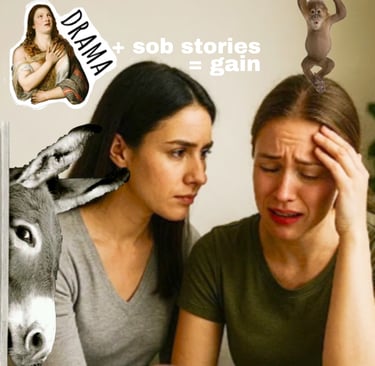
Not everyone who shows pain is actually looking to heal. Some are looking to be seen, to be saved, or sometimes… to benefit from it.
I’ve come across people who always seem to be in some kind of crisis. Every conversation circles back to their struggle, their hurt, their story. At first, you feel empathy. You listen, you support, you try to understand. But after a while, you start noticing a pattern. The same problems, the same reactions, the same emotional intensity—but no real effort to change anything.
It starts to feel less like pain and more like performance.
There’s a difference between someone who is genuinely hurting and someone who has learned that showing hurt gets them attention, sympathy, or even favors. It’s subtle, but you can feel it. Real pain doesn’t usually try to convince you. It doesn’t need an audience. It just exists—quiet, heavy, and often deeply private.
But when pain turns into a strategy, it looks different.
It shows up at the right time.
It gets louder when attention fades.
It shifts depending on who’s watching.
And slowly, you realize—it’s not about healing. It’s about getting something.
Maybe it’s validation. Maybe it’s control. Maybe it’s benefits. Maybe it’s just attention. Whatever it is, the emotions become a tool. And the people around them become the audience.
What makes this hard is that we’re wired to care. We don’t want to doubt someone’s pain. We don’t want to be the person who “doesn’t understand.” So we keep giving—time, energy, emotional support—until we feel drained.
Here’s what I’ve learned: you can be compassionate and still have boundaries.
Not every emotional display deserves your full involvement. Not every story needs your energy. And not every person who asks for sympathy is looking for growth.
The people who are truly going through something deep don’t usually turn it into a constant show. They don’t repeat it for effect. They don’t use it to pull others in again and again. They might open up—but they don’t perform.
This isn’t about becoming cold or cynical. It’s about being aware.
Because if you don’t notice the difference, you can end up investing your heart in something that was never really about healing in the first place.
And that’s exhausting.
So now, I try to pay attention to patterns, not just emotions. I still care, I still listen—but I don’t ignore what I see anymore.
Some pain is real.
Some pain is processed.
And some pain is performed.
Learning the difference changes everything.
Team H&H stb


