
Dealing With a Toxic Man
Understanding, Boundaries, and Choosing Yourself
Team H&H
1/9/20262 min read
Dealing With a Toxic Man: Understanding, Boundaries, and Choosing Yourself
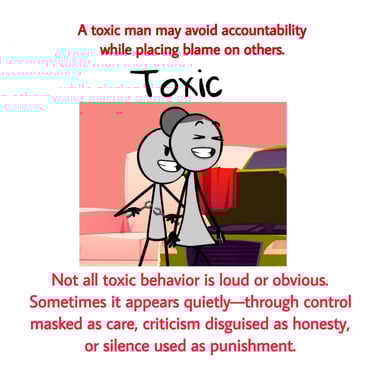
Not all toxic behavior is loud or obvious. Sometimes it appears quietly—through control masked as care, criticism disguised as honesty, or silence used as punishment. Dealing with a toxic man can slowly drain emotional energy, leaving confusion, self-doubt, and exhaustion in its wake.
What makes toxicity difficult to identify is that it often begins subtly. A toxic man may initially seem charming, attentive, or intense. Over time, however, patterns emerge—dismissal of your feelings, manipulation, jealousy, inconsistency, or an ongoing need for control. These behaviors are not occasional mistakes; they are repeated actions that create emotional imbalance.
Recognizing Toxic Patterns
A toxic man may avoid accountability while placing blame on others. He may gaslight—making you question your memory, reactions, or emotions. He might withdraw affection to gain power or use anger and silence to dominate conversations. Often, your needs are minimized while his emotions take priority.
If you find yourself constantly explaining your pain, walking on eggshells, or doubting your worth, these are not signs of sensitivity—they are signals of an unhealthy dynamic.
Why People Stay
Many stay in toxic relationships not because they are weak, but because they are hopeful, empathetic, or emotionally invested. You may believe that love, patience, or understanding will bring change. Sometimes shared history, fear of loneliness, or social conditioning reinforces endurance over self-respect.
But understanding someone’s wounds does not require accepting their harmful behavior.
The Emotional Impact
Prolonged exposure to toxicity affects mental and emotional health. Anxiety, loss of confidence, emotional numbness, and chronic stress are common outcomes. Over time, you may start shrinking yourself—limiting expression, ambition, or joy—to maintain peace.
Love should not feel like survival.
Setting Boundaries
The most powerful response to a toxic man is not argument—it is boundaries. Clear, consistent boundaries define what behavior you will and will not accept. Healthy individuals respect boundaries; toxic individuals challenge, mock, or violate them.
When boundaries are repeatedly crossed, the message is clear. Believe actions more than promises.
You Are Not Responsible for Changing Him
One of the greatest misconceptions is believing it is your role to heal or fix someone. Growth requires self-awareness and willingness—qualities no one else can force. You can support change, but you cannot manufacture it.
Choosing yourself is not selfish; it is self-preservation.
Walking Away
Leaving a toxic man can be painful and frightening, but it often brings clarity and peace. Distance allows healing. Silence creates space for self-connection. Over time, what once felt like loss becomes relief.
Healthy relationships are built on respect, consistency, emotional safety, and mutual growth. Anything less deserves reflection.
Final Thoughts
Dealing with a toxic man is ultimately about reclaiming your power. It is about listening to your intuition, honoring your needs, and choosing environments where you can thrive rather than survive.
You deserve a relationship that adds to your life—not one that slowly takes you away from yourself.
Take care,
Team H&H stb


